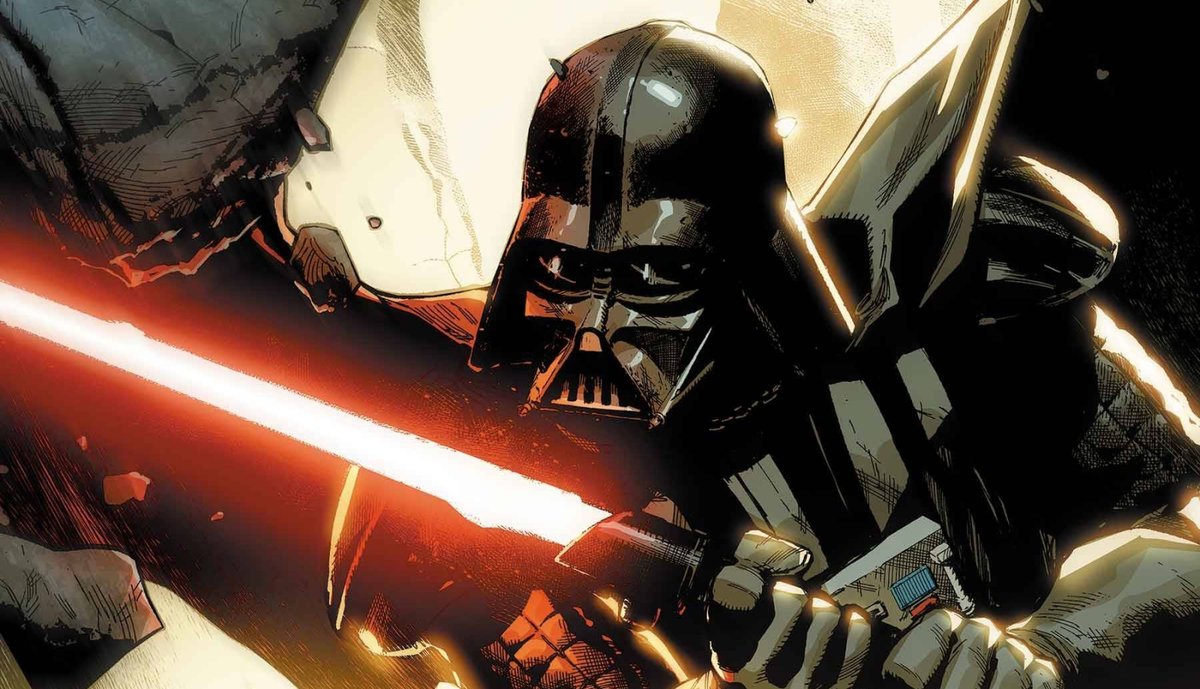
For any dedicated Star Wars fan, few figures loom as large or cast a shadow as long as Darth Vader. His imposing silhouette, mechanical breathing, and iconic crimson blade define an era of galactic oppression. But a persistent question often floats through discussions, especially among those diving into the animated sagas: Clarifying the Myth: Is Darth Vader Truly in The Clone Wars? It’s a compelling query, loaded with more nuance than a simple yes or no.
Let’s cut straight to the core of this galactic mystery.
At a Glance: The Vader/Anakin Clone Wars Breakdown
- Is Darth Vader (the masked Sith Lord) in The Clone Wars? No.
- Is Anakin Skywalker in The Clone Wars? Absolutely, and he's the central protagonist.
- What's the confusion about? Vader's iconic status, the series bridging the Prequels, and a specific, curious incident involving a Darth Vader clone after the Clone Wars.
- When does Anakin become Darth Vader? At the very end of the Clone Wars, during Revenge of the Sith.
- What about a Darth Vader clone? A faulty clone was created on Dantooine and destroyed by the real Vader, but this occurred in 0 ABY, long after the Clone Wars (19 BBY).
- Why is this distinction important? Understanding Anakin's journey in The Clone Wars is crucial to comprehending his eventual fall and Vader's motivations.
The Nuance of a Name: Why Vader Isn't, But Anakin Is
To truly clarify this myth, we need to understand the fundamental timeline of the Star Wars saga. The Clone Wars animated series, in both its original 2003 iteration and the beloved 2008 series, chronicles the epic conflict between the Galactic Republic and the Separatist Alliance. This war spans from 22 BBY (Before the Battle of Yavin) to 19 BBY. Throughout this turbulent period, the Jedi Knight at the forefront of countless battles, the hero with no fear, is Anakin Skywalker.
He is the prodigy, the "Chosen One," fighting valiantly alongside Obi-Wan Kenobi and his Padawan, Ahsoka Tano. This era is where we witness Anakin Skywalker's evolution from Jedi Knight to fallen hero in painstaking detail. We see his heroism, his compassion, his deep attachments, and, critically, the burgeoning darkness—his anger, his fear of loss, his defiance of the Jedi Council. These are the seeds that will eventually sprout into the terrifying persona of Darth Vader.
But Darth Vader himself, the cybernetically enhanced Lord of the Sith, clad in black armor, does not make an appearance in The Clone Wars. His first appearance in that iconic form is at the very end of the war, during the events of Star Wars: Episode III – Revenge of the Sith, when Anakin Skywalker succumbs entirely to the dark side and is reborn on the operating table on Mustafar. The mask, the cape, the respirator—these are all post-Clone Wars developments.
When Anakin Skywalker Sheds His Skin: A Timeline of Transformation
The transition from Anakin Skywalker to Darth Vader isn't a single flip of a switch; it's a tragic, drawn-out process that culminates with Emperor Palpatine's nefarious machinations. The end of The Clone Wars seamlessly flows into Revenge of the Sith. It's there, amidst the chaos of Order 66 and the Jedi Purge, that Anakin fully embraces the dark side, believing it’s the only path to save Padmé Amidala.
His confrontation with Obi-Wan Kenobi on Mustafar leaves him gravely wounded. It's Palpatine who rescues him, rebuilds him, and officially names him Darth Vader. This transformation marks the true end of the Clone Wars and the beginning of the Galactic Empire's iron-fisted rule. So, while Anakin Skywalker's actions and character arc in The Clone Wars are absolutely vital to understanding Darth Vader, the armored Sith Lord simply isn't present during the conflict itself. His persona is a direct consequence of its conclusion.
The Curious Case of the Darth Vader Clone: A Post-War Anomaly
Here’s where some of the myth's "truthiness" might originate, for there was indeed a Darth Vader clone. However, this fascinating, albeit brief, event occurred long after the Clone Wars had ended.
Imagine this: Sometime before 0 ABY, the year of A New Hope, Darth Vader visited ancient Jedi ruins on the remote planet Dantooine. This wasn't just any ruin; it housed an active, unmanned cloning facility. During his visit, Vader was injured, leaving behind a crucial sample: his blood.
Experimental cloning droids, perhaps sensing the Force signature, used this biological material to create a clone. The droids then attempted a mysterious process to imprint Vader's formidable personality onto this new being. The result, however, was far from perfect. The cloning process was faulty, leaving the clone with only partial mental functioning and a fractured personality synchronization.
This "Vader clone" was a crude imitation. It was dressed in an accurate but non-functional costume, cobbled together from scrap materials. Its imitation lightsaber produced a fake, non-damaging blade—a mere mimicry of the real thing. It was a phantom, an echo, not the true Sith Lord.
The real Darth Vader eventually returned to the Dantooine facility in 0 ABY. Upon encountering his imperfect duplicate, he swiftly engaged and slew his own clone in battle. This incident, while undeniably involving a "Darth Vader clone," is distinct from and occurred nearly two decades after the Clone Wars, further solidifying the fact that the actual Darth Vader, in his iconic suit, was not a participant in the conflict. This subtle distinction between Anakin Skywalker during the war and a clone after the war often fuels the misunderstanding.
Beyond the Mask: What Master of Evil Reveals About Vader's Lingering Past
Even if Darth Vader wasn't literally present in The Clone Wars, the specter of his past and the motivations forged during that era continue to define him long after. Adam Christopher's novel, Master of Evil, offers a compelling glimpse into Vader's psyche post-transformation, revealing how deeply the events of the Clone Wars—and particularly his relationship with Padmé Amidala—continued to torment him.
The novel reminds us that Vader's initial, agonizing choice to join Emperor Palpatine was predicated on a single, desperate hope: saving Padmé's life. Palpatine had promised to "work together" to "discover the secret" of preventing her demise or even bringing her back from the dead. This, of course, was a cruel bait-and-switch, a manipulation to secure Anakin's allegiance and prioritize the building of the Galactic Empire.
In Master of Evil, set after Anakin's transformation, Vader confronts Palpatine about this broken promise. Palpatine's response is chillingly familiar: he uses Force lightning on Vader, dismissively stating that Vader's "old identity is a liability." He then sends Vader on a dubious quest to the Diso system to find a supposed "resurrectionist," a task Palpatine himself isn't even sure is possible. This shows the Emperor's willingness to keep Emperor Palpatine's cunning manipulation alive and well, playing on Vader's deepest scars.
The novel masterfully weaves two main plots: Vader's relentless quest for this potential resurrectionist and Imperial Guard Goth's investigation into Vader's true identity. A key theme emerges: the manipulation and siloing of information, making truth a slippery concept even for powerful figures like Palpatine and Vader. Data in the Star Wars galaxy is portrayed as analog and not easily accessible, with examples like half-fried medical droid hard drives and erased Jedi library archives. This serves as a powerful metaphor for real-world issues of corrupt leaders manipulating information in the face of an uncurious populace.
Master of Evil subtly contrasts the Jedi's diminished curiosity in the prequel era with the inquisitiveness of Anakin (even as Vader), Goth, and TC-99. It strongly suggests that "the power of the Force is insignificant next to a good fact-finding mission." This sentiment perfectly encapsulates our own journey in clarifying the myth surrounding Vader in The Clone Wars. The novel, while set later, reinforces how deeply Vader's identity is tied to his Clone Wars experiences and his desperate hope for Padmé, making the exploration of Darth Vaders Clone Wars journey through Anakin's eyes essential.
Why the Confusion Lingers: Common Misconceptions Explored
The myth of Darth Vader appearing in The Clone Wars persists for several understandable reasons:
- The Iconic Nature of the Mask: Darth Vader is arguably the most recognizable villain in cinematic history. His image is synonymous with Star Wars, and his presence often overshadows the more complex figure of Anakin Skywalker for casual viewers.
- Prequel Trilogy Bridging: The prequel films—especially Revenge of the Sith—provide the direct narrative link between Anakin and Vader. Since The Clone Wars fills the gap between Episode II and Episode III, it's easy to assume the fully formed Vader might make an appearance.
- Comprehensive Animated Storytelling: The Clone Wars is an incredibly vast and detailed series, offering a deep dive into the era. Fans often expect every significant character to appear, and Vader certainly qualifies as significant. Understanding the intricate timeline of the Clone Wars helps clarify these distinctions.
- General Timeline Blurring: For many, the entire era between The Phantom Menace and A New Hope can sometimes blend into one continuous narrative, making specific timeline distinctions harder to recall without careful attention.
Anakin Skywalker's Clone Wars Journey: The True Story Behind the Myth
Instead of searching for Darth Vader, what fans truly uncover in The Clone Wars is the profoundly complex and often heartbreaking story of Anakin Skywalker. This is where you see the nascent darkness, the seeds of his inevitable fall.
The series portrays Anakin as a brilliant, if reckless, military strategist and a powerful Jedi. You witness his deep bonds with his master, Obi-Wan Kenobi, and his secret marriage to Padmé Amidala. Crucially, you follow his mentorship of Ahsoka Tano, a relationship that profoundly shapes both characters and showcases Anakin's protective, sometimes possessive, tendencies. These relationships, particularly with Ahsoka, reveal the emotional vulnerabilities that Palpatine expertly exploits.
The Clone Wars allows us to truly grasp Anakin Skywalker's tragic fall to the dark side by showing us the good he was capable of, the friendships he forged, and the moral compromises he began to make. It's an exploration of how a hero can be corrupted, step by agonizing step, not by a single act, but by a confluence of fear, ambition, and manipulation. The series reveals that the spirit of Vader, the person Anakin Skywalker was destined to become, is absolutely central to the narrative, even if the mask and respirator are absent.
Understanding Canon vs. Legends and the Role of Cloning
It's also worth a quick mention that the concept of cloning, while central to the Clone Wars (with the clone troopers), also plays a significant role in both Star Wars canon and the expanded universe (now known as Legends) outside of the main films. The Darth Vader clone incident on Dantooine is part of the established canon, illustrating that cloning technology had advanced to remarkable (and sometimes dangerous) levels.
The very idea of a clone of a powerful Force-user raises fascinating questions about identity, the nature of the Force, and the possibility of resurrection—themes touched upon in Master of Evil. Understanding the nuanced relationship between Star Wars Legends and canon when discussing cloning helps contextualize such events, ensuring clarity on what is considered official Star Wars history and what exists in alternative timelines.
The Verdict: No Mask, But All the Makings of a Sith Lord
So, to definitively clarify the myth: No, Darth Vader, the iconic Sith Lord in his imposing armor, does not appear in The Clone Wars. The masked villain is a product of the war's end, the culmination of Anakin Skywalker's tragic descent.
However, the essence of Darth Vader—the fears, the attachments, the anger, and the ambition that drive his transformation—are intricately woven into every episode featuring Anakin Skywalker. You're witnessing the architect of his own doom, a hero on the precipice of becoming the galaxy's most feared villain.
Your Next Dive into the Star Wars Galaxy
Instead of searching for Darth Vader, immerse yourself in Darth Vaders Clone Wars journey by watching Anakin Skywalker's arc in The Clone Wars. Pay close attention to his interactions, his moral dilemmas, and the subtle cues that foreshadow his tragic destiny.
Then, for a deeper understanding of the lasting psychological impact of the Clone Wars on Vader, consider exploring Adam Christopher's Master of Evil. It’s a compelling read that bridges the gap between the immediate aftermath of Vader's transformation and the established villain we know from the original trilogy, constantly circling back to the unfulfilled promises and deep-seated pain born from the very era we’ve discussed. You'll gain a richer appreciation for the man behind the mask and the complex mythology that binds him to a conflict he never truly left behind.