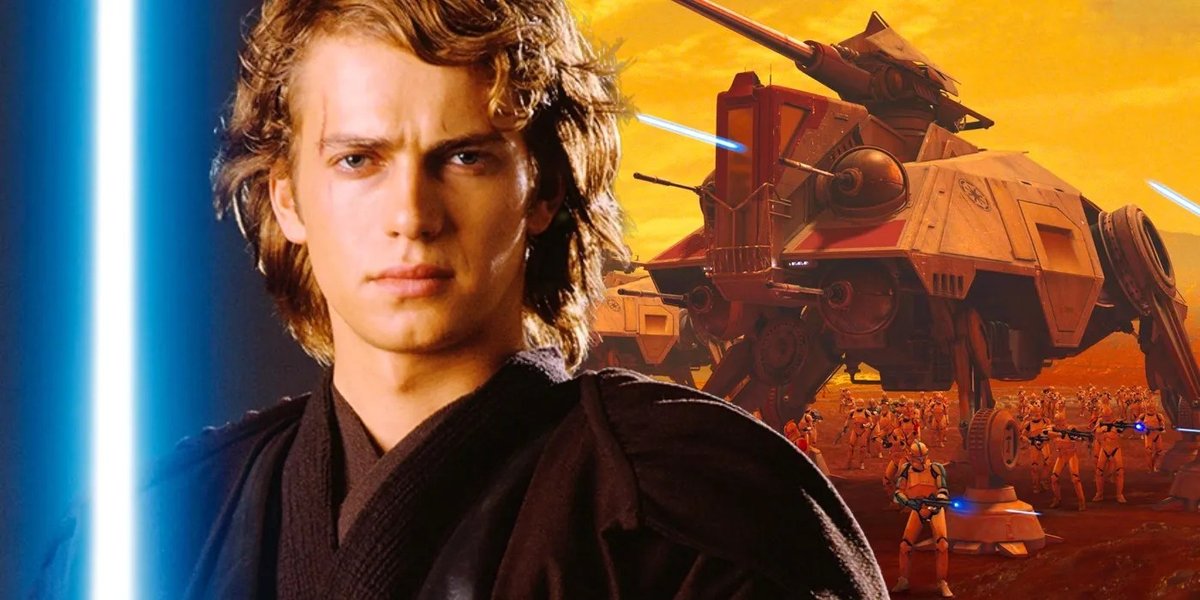
When we talk about epic sagas, few narratives resonate as deeply or complexly as Star Wars. And at the heart of its most profound tragedy and eventual triumph lies Anakin Skywalker's Arc: The Hero of The Clone Wars Era. It's a story that isn't just about good versus evil, but about the insidious corruption of fear, the power of love, and the ultimate, redemptive struggle within oneself. Anakin's journey isn't merely a backdrop to a galactic war; it is the war – a battle waged for his soul, played out on the grandest stage imaginable.
From the sun-scorched dunes of Tatooine to the fiery banks of Mustafar, and finally, to the throne room of the Emperor, Anakin's path defines an era. He was the golden boy, the saviour, the paragon of the Jedi Order. Then he became its destroyer, the galaxy's darkest nightmare. Understanding his arc isn't just about knowing what happened, but why it happened, and what his incredible journey teaches us about heroism, hubris, and hope.
Anakin's Arc: At a Glance
- Born of the Force: A slave on Tatooine, identified as the "Chosen One" destined to bring balance to the Force.
- Jedi Prodigy: Trained by Obi-Wan Kenobi, he became a gifted pilot and powerful Jedi Knight, quickly rising to prominence as a Republic General during the Clone Wars.
- Forbidden Love: Secretly married Senator Padmé Amidala, defying Jedi tenets against attachments.
- Seeds of Doubt: Manipulated by Chancellor Palpatine, he grew distrustful of the Jedi Council and obsessed with preventing death.
- The Fall: Consumed by fear of losing Padmé, he turned to the Dark Side, becoming Darth Vader and orchestrating the Jedi Purge (Order 66).
- The Machine: Severely injured and rebuilt as a cyborg, he served the Galactic Empire for decades, becoming its most terrifying enforcer.
- Redemption: Sacrificed himself to save his son, Luke Skywalker, from Emperor Palpatine, fulfilling the Chosen One prophecy and bringing balance to the Force.
The Promise: From Tatooine Slave to Jedi Prodigy
Imagine a boy on a desolate desert planet, a slave building droids and winning dangerous pod races to survive. That was Anakin Skywalker. Born to Shmi Skywalker, he was, remarkably, conceived through the Force itself, without a father. This unusual origin immediately marked him as special, hinted at a destiny far beyond his humble beginnings. He was gifted with a natural aptitude for mechanics and an innate connection to the Force, talents that caught the attention of Jedi Master Qui-Gon Jinn.
Qui-Gon, recognizing the raw power and potential within the young Anakin, believed him to be the prophesied Chosen One—the one destined to bring balance to the Force. Despite the Jedi Council's apprehension, particularly about his age and his strong emotional attachments, Anakin was brought into the Order. He began his training as a Padawan under Obi-Wan Kenobi, a relationship that would become the cornerstone of his early life, fraught with both deep affection and burgeoning tension.
The Heart of the Conflict: General Skywalker in the Clone Wars
The galaxy was plunged into chaos with the outbreak of the Clone Wars, a conflict that pitted the Galactic Republic against the Separatist Alliance. It was during this brutal, years-long struggle that Anakin truly shone as a hero. Promoted to Jedi Knight and then Republic General, he led clone troopers into countless battles, earning a reputation for daring tactics, incredible piloting skills, and a fearless, often reckless, pursuit of victory.
Unlike his more cautious master, Obi-Wan, Anakin was impulsive, often relying on instinct and raw power rather than careful strategy. This dynamic, while sometimes frustrating, often led to brilliant successes on the battlefield. He was a beacon of hope for the Republic, a symbol of Jedi prowess and unwavering commitment. His bravery inspired his troops, and his unique connection to them fostered a fierce loyalty. This era also deepened Anakin's key relationships, especially with Obi-Wan and his own Padawan, Ahsoka Tano, shaping him both as a warrior and as a person. He wasn't just a soldier; he was a leader, a mentor, and to many, a friend.
Forbidden Desires: Love, Fear, and the Jedi Code
Beneath the veneer of the courageous Jedi General, a different battle raged within Anakin. The Jedi Order, in its wisdom, enforced the Jedi's strict code against attachments, fearing that personal emotional bonds could lead to possessiveness, fear of loss, and ultimately, the Dark Side. But Anakin, with his deep capacity for love and loyalty, found this tenet agonizingly difficult.
His heart had already been captured by Senator Padmé Amidala, a woman of grace, courage, and political conviction whom he had first met as a boy. Their connection blossomed into a secret romance, culminating in a forbidden marriage. This love, while pure and powerful, became a ticking time bomb. Anakin's fear of losing Padmé, magnified by haunting visions of her death—a tragic echo of his mother Shmi's demise—began to consume him. This fear, coupled with the secrecy of his marriage, created a fertile ground for doubt and desperation to take root. He believed his love for Padmé was a strength, but the Jedi saw it as a weakness, a gateway to the very darkness they sought to prevent.
The Seeds of Doubt: Palpatine's Web and the Jedi's Blinders
While Anakin was busy fighting the war, a far more sinister plot was unfolding in the shadows. Chancellor Sheev Palpatine, a seemingly benevolent figure and trusted mentor, had been cultivating a close relationship with Anakin for years. Palpatine saw Anakin's immense power, his emotional vulnerability, and his growing frustration with the Jedi Council. He systematically exploited these weaknesses, subtly poisoning Anakin's mind against the Jedi.
Palpatine questioned the Jedi's motives, their perceived arrogance, and their seemingly rigid interpretation of the Force. He subtly suggested that the Jedi were holding Anakin back, preventing him from achieving his full potential. When Palpatine appointed Anakin to the Jedi Council without their approval, and the Council, in turn, refused to grant him the rank of Master, it fueled Anakin's sense of injustice and alienation. Palpatine's masterful manipulation was a slow, deliberate poisoning, chipping away at Anakin's loyalty to the Jedi, making him question everything he thought he knew. Anakin's recurring visions of Padmé's death became the final, crucial lever for Palpatine. He offered Anakin a path, a forbidden power, to save his beloved from the inevitable.
The Inevitable Fall: Darth Vader's Birth
The climax of Anakin's internal struggle was devastating. When Palpatine revealed himself to be Darth Sidious, the Dark Lord of the Sith, he offered Anakin a choice: embrace the Dark Side and gain the power to save Padmé, or remain with the Jedi and watch her die. Blinded by fear and desperation, Anakin chose the former. He betrayed the Jedi Order, helping Sidious execute Order 66, which led to the devastating impact of Order 66 and the near-total annihilation of the Jedi Knights. This was Anakin's path to Vader – a rapid, brutal descent into darkness.
His former Master, Obi-Wan Kenobi, confronted him on the volcanic planet Mustafar. It was a duel born of heartbreak and betrayal, a clash of two brothers forever changed. Obi-Wan, with profound reluctance, defeated Anakin, leaving him dismembered and burning on the lava-strewn landscape. Sidious retrieved his dying apprentice, rebuilding his shattered body with cybernetics and encasing him in the iconic life-support suit, thus completing the transformation into Darth Vader. At the same time, Padmé, heartbroken by Anakin's turn and believing him dead, died giving birth to their twins, Luke and Leia. Vader, consumed by pain and deception, was told he had killed her, a lie that cemented his dedication to the Galactic Empire. The hero of the Clone Wars was no more; in his place stood the galaxy's most feared enforcer.
The Long Shadow: Darth Vader and the Galactic Empire
For decades, Darth Vader served as the Emperor's brutal hand, a terrifying symbol of the Empire's dominion. He hunted down the remaining Jedi, crushed rebellions, and struck fear into the hearts of any who dared defy the new order. The man who was once Anakin Skywalker, the compassionate hero, was now a machine of pure, cold efficiency, driven by anger and the lingering pain of his past. The Force that once flowed through him with lightness and grace now coursed with dark power and suffocating despair. He had gained immense power, but at the cost of his soul, his love, and his humanity.
The Return of the Jedi: Redemption and the Chosen One's True Purpose
Years passed, and a new hope emerged in the form of Vader's own children, Luke and Leia Skywalker. Unbeknownst to Vader, his twins had been hidden from him and the Emperor. Luke, strong in the Force and trained by Jedi Master Yoda, eventually confronted his father. In a climactic lightsaber duel, Luke bested Vader but refused to kill him, refusing to succumb to the hate that had consumed his father. This act of compassion, of unwavering hope, chipped away at the darkness encasing Vader's heart.
In the final confrontation with Emperor Palpatine, as Sidious tortured Luke with Force lightning, Vader faced a choice. His master, the one who had promised him power, was destroying his son, the last vestige of his beloved Padmé and his past self. In that moment, the love for his son, a flicker of the light that had been Anakin, broke through the armor of Darth Vader. He lifted his master and threw him down a reactor shaft, sacrificing himself to save Luke.
Mortally wounded by the Emperor's lightning, Vader asked Luke to remove his helmet, to see him, just once, with his own eyes. In his final moments, the face revealed was not the monster, but Anakin Skywalker. He died in Luke's arms, having fulfilled his true destiny as the Chosen One – not by destroying the Sith as a young Jedi, but by destroying them through ultimate sacrifice, bringing balance back to the Force and achieving a profound redemption. His understanding dawned: the immortality he had sought for Padmé lived on, not through dark power, but through their children, who fought for peace and a better galaxy. This act of self-sacrifice cemented the profound legacy of Darth Vader's redemption.
Mapping the Hero's Journey: A Timeless Tale
Anakin Skywalker's arc is more than just a character study; it's a textbook example of Joseph Campbell's "Hero's Journey," a monomyth found across cultures. Understanding his story through this framework reveals its universal resonance:
- Ordinary World: Anakin begins as a slave boy on Tatooine, a technologically gifted pilot with an uncanny connection to the Force, but trapped by his circumstances.
- Call to Adventure: Qui-Gon Jinn identifies him as the Chosen One, inviting him to leave his past behind and train as a Jedi, setting him on a path towards a destiny greater than he could imagine.
- Refusal of the Call: While eager for a new life, Anakin initially balks at leaving his mother, illustrating his deep emotional ties, which the Jedi Council views with skepticism.
- Meeting the Mentor: Obi-Wan Kenobi takes him as his Padawan, teaching him the ways of the Force and attempting to guide his impulsive nature. This mentorship is crucial for his development.
- Tests, Allies, and Enemies: Anakin's Jedi training, his heroic actions during the Clone Wars, his secret romance with Padmé, his bond with Obi-Wan and Ahsoka, and his growing friction with the rigid Jedi Council all constitute this phase. He navigates loyalty, love, duty, and nascent doubts.
- Approach to the Inmost Cave: His disturbing visions of Padmé's impending death, mirroring his mother's tragic fate, drive him to seek forbidden knowledge. This pushes him towards Chancellor Palpatine, who promises the power to prevent death, drawing Anakin closer to the precipice.
- Ordeal: This is the cataclysmic turning point: Anakin's betrayal of the Jedi Order, his murder of younglings, his confrontation with Obi-Wan on Mustafar, and his full embrace of the Dark Side to become Darth Vader. He "dies" as Anakin and is reborn as the Sith Lord.
- Reward (Seizing the Sword): He gains immense Sith power, a twisted form of what he sought. However, this "reward" comes with devastating consequences: Padmé's death (which he believes he caused), the destruction of the Jedi, and his own physical and spiritual mutilation. He becomes powerful, but utterly alone and consumed by hate.
- The Road Back: As Darth Vader, he enforces the Emperor's will, but the emergence of his son, Luke, begins to stir the forgotten light within him. He struggles between his loyalty to the Emperor and the burgeoning, terrifying love for his child.
- Resurrection (The Climax): In the Emperor's throne room, Vader faces his ultimate test. As Palpatine tortures Luke, Anakin makes his choice. He overcomes his decades of darkness, his past self "resurrected" in a moment of selfless love, sacrificing himself to save his son from the Emperor.
- Return with the Elixir: Anakin dies, but he dies as a redeemed Jedi, his spirit joining the Force. He brings balance, not by conquering, but by sacrificing. The "elixir" he returns with is peace and the restoration of hope to the galaxy, fulfilling his destiny as the Chosen One.
Beyond the Lightsaber: What Anakin's Journey Teaches Us
Anakin Skywalker's arc is a masterclass in storytelling, offering profound insights into the human (and Force-sensitive) condition.
- The Insidious Nature of Fear: Anakin's fall wasn't born of inherent evil, but of overwhelming fear – fear of loss, fear of helplessness, fear of being alone. It teaches us how easily fear can be manipulated and twisted into anger and hate, leading even the brightest among us down the darkest paths.
- The Power of Attachment (Both Good and Bad): The Jedi philosophy of non-attachment served a purpose, but for Anakin, his deep capacity for love was both his greatest strength and his fatal flaw. It highlights the delicate balance between genuine connection and possessive fear. True love, as shown by Luke, is about selfless devotion, not control or preservation at any cost.
- Redemption is Always Possible: Perhaps the most enduring lesson from Anakin's story is that even after decades of immense evil, redemption is never truly out of reach. It takes immense courage, sacrifice, and the unwavering belief of another, but the spark of good can always be rekindled.
- Prophecy's Nuance: Anakin was the Chosen One, destined to bring balance to the Force. He did so, but not in the way anyone expected. His journey shows that destiny isn't a straight line, and sometimes, balance comes through destruction before creation, through darkness before light.
- The Importance of Mentorship and Support: While Obi-Wan tried his best, Anakin's tumultuous arc highlights the challenges of guiding a powerful, emotionally intense individual. It underscores the need for comprehensive support, addressing not just skills but also emotional well-being, especially when dealing with such immense power.
Anakin Skywalker’s transformation from hero to villain and back to hero again isn't just a fantasy epic; it's a timeless allegory for the internal battles we all face. It reminds us that our choices, driven by love or fear, shape our destiny, and that even in the deepest darkness, the light of hope and redemption can prevail. His legacy isn't just about Darth Vader, but about the enduring struggle for balance, both within ourselves and in the galaxy far, far away.